Conditions Treated · Low Back Pain

Low Back Pain Treatment in Seattle

Chronic low back pain is the most common reason people seek bodywork at Treatment Massage. Structural integration addresses the fascial restrictions, postural imbalances, and compensation patterns that are the actual structural cause of most lumbar pain.

Why Low Back Pain Is Usually a Structural Problem

The lumbar spine doesn't exist in isolation. It's the center of a mechanical system that includes the pelvis, hips, thoracic spine, and legs. When the fascia in any of these areas becomes restricted — through injury, postural habit, repetitive stress, or compensation — the lumbar spine bears the consequences.

This is why low back treatments that focus only on the low back often don't produce lasting results. The pain is coming from a broader structural pattern. Structural integration addresses the whole pattern: the pelvic position, the hip flexor tension, the thoracolumbar fascia, the relationship of the whole spine — and the result is lasting relief rather than temporary symptom management.

Most clients who come in with low back pain have already tried massage, chiropractic, or physical therapy. Many have experienced partial or temporary relief. Structural integration is often what provides lasting change because it works at the level of the fascial system — where the patterns actually live.

Common pattern: The low back pain you feel is often coming from tight hip flexors, restricted lumbar fascia, and a pelvis that's been stuck in an anterior tilt for years. Structural work addresses all three together — that's why it works when isolated treatments haven't.
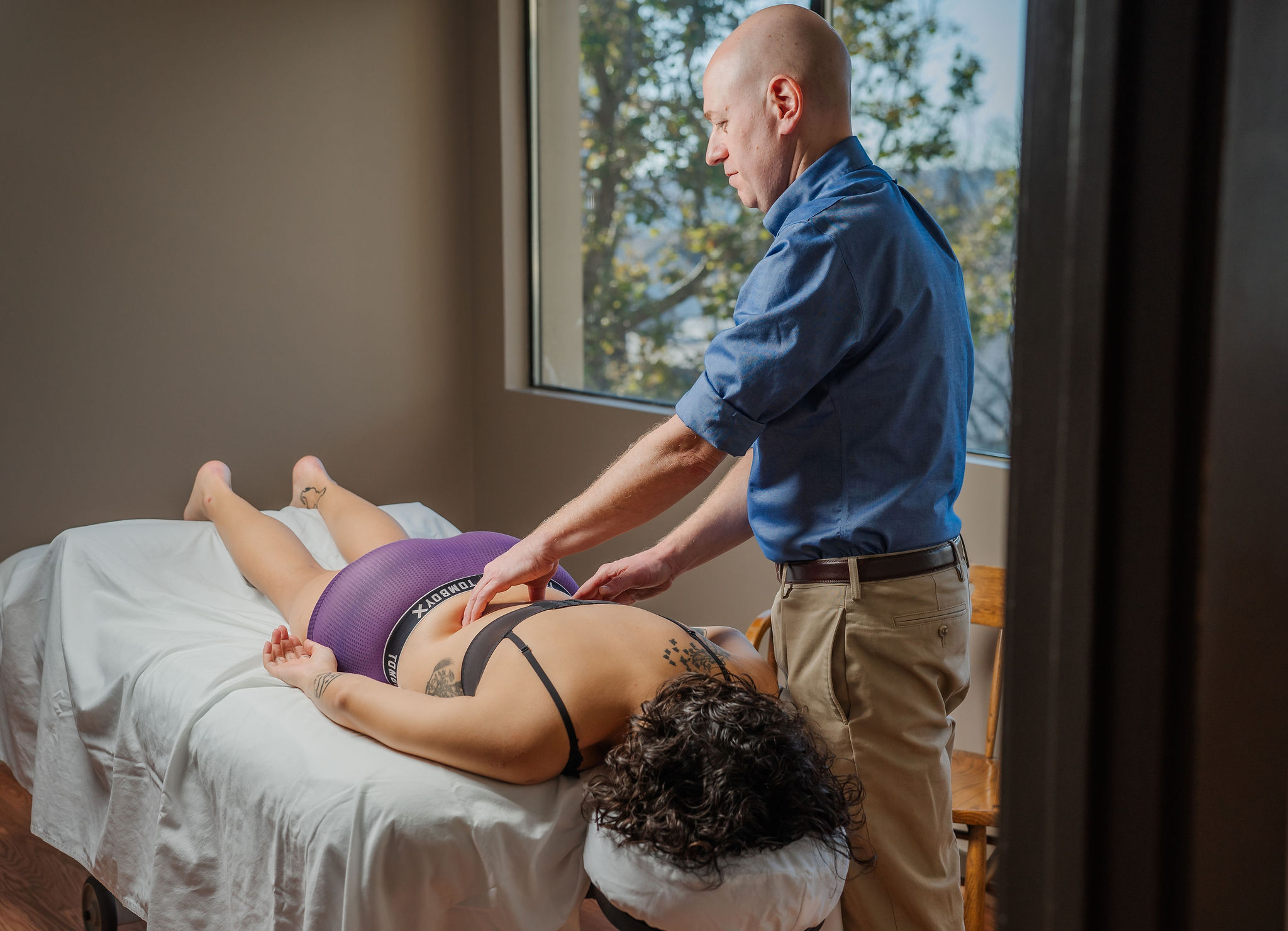
Common structural contributors:

  • Tight hip flexors pulling the pelvis into anterior tilt
  • Thickened thoracolumbar fascia
  • Lumbar compression from poor postural alignment
  • Sacroiliac joint dysfunction (often fascial)
  • Piriformis and deep external rotator restriction
  • Upper body weight transferred forward through poor posture
  • Old injury compensation patterns (even from other areas)
  • Disc-related pain that has fascial components

Disclaimer: This is information about how structural bodywork addresses common low back pain patterns. If you have a specific diagnosis (herniated disc, spinal stenosis, etc.), please discuss with your physician what bodywork is appropriate for your situation.

How We Approach Low Back Pain

  1. Structural assessment — postural analysis identifies the actual pattern: where the body is compensating and what regions are involved beyond the low back itself.
  2. Pelvic and lumbar fascial work — releasing the thoracolumbar fascia, the hip flexors, and the structures that are pulling or loading the lumbar spine.
  3. Lower extremity balance — addressing how the legs and feet transmit forces into the pelvis and low back. This is often overlooked and often crucial.
  4. Global structural integration — for long-standing patterns, the whole body's organization needs to change. A series of sessions addresses this systematically.
  5. Movement education — small movement cues during and between sessions help integrate structural changes into everyday posture and movement.

Common Questions About Low Back Pain Treatment

Can structural integration help with chronic low back pain?

Yes. Structural integration addresses the fascial restrictions, postural imbalances, and compensation patterns that are the most common structural causes of chronic low back pain. Many people experience lasting relief after a series of sessions, including people who have not responded to PT, chiropractic, or standard massage.

Will it work for disc herniation or sciatica?

Disc-related pain and sciatica have fascial and structural components alongside any disc pathology. Structural work can address those components, often providing significant relief. The approach is adapted to your specific diagnosis — please discuss the details of your situation at your first session or consultation.

How many sessions does low back pain treatment take?

A targeted series of 3–6 sessions can address specific low back patterns. A full structural integration series of 9–12 sessions addresses the whole body, which is often necessary for long-standing or complex presentations. We'll make a recommendation after the initial assessment.

Is this covered by insurance?

Please check the Rates & Policies page or call 206-234-9929 for current insurance information. Some L&I and PIP claims may be accepted.

I first came to you over a dozen years ago with lower back pain. I had been through physical therapy and tried a chiropractor. Nothing helped. While sitting or standing the pain was always there. My only small relief was while walking. I was in my 50s and was looking at a limited life.

Then I came to you. You explained what my issue was and were very positive you could return me to a pain free existence. It took a year of visits but it worked. I'm now retired and in my 70s and living pain free (well at least my back is pain free). I've been able to trek in Nepal, take week long backpack or kayak trips, dig in the garden, really anything I want. If I do feel a slight tightness in the back, out comes the lacrosse ball and all is well.

So, on this Thanksgiving, I wanted to thank you. You returned me to the life I wanted and for that I am forever grateful.

Rich J. — chronic low back pain

You don't have to live with low back pain.

Book a session or free 10-minute phone consultation in Seattle's U-District. Most appointments available within the week.

Book an Appointment See All Conditions