Conditions Treated · TMJ Dysfunction

TMJ Pain Treatment in Seattle

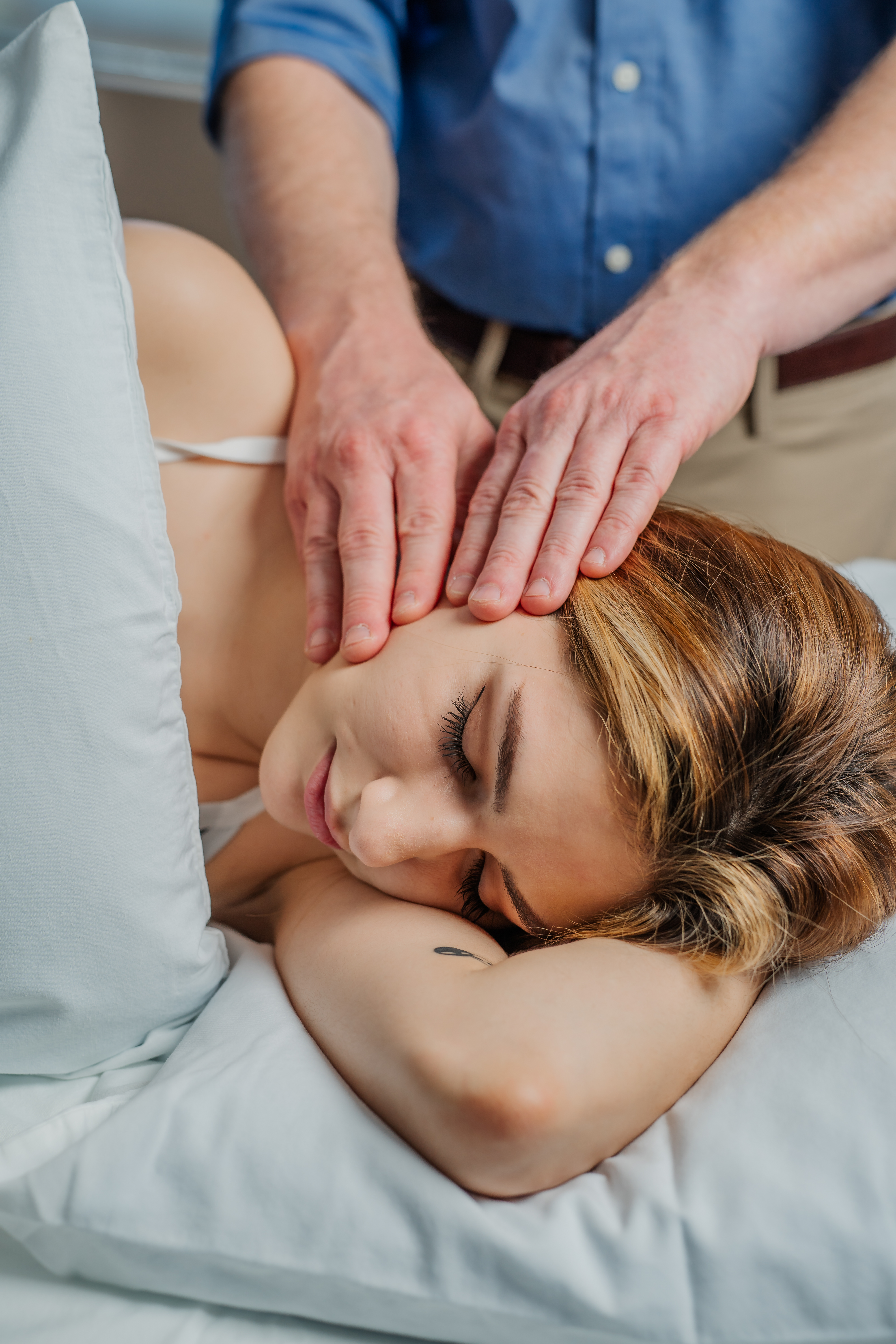
Jaw pain, clicking, locking, and the headaches that come with TMJ dysfunction respond exceptionally well to craniosacral therapy and structural integration. These approaches work with the jaw, cranium, neck, and upper body as the connected system they actually are.

Why the Jaw Is Rarely the Whole Story

The temporomandibular joint (TMJ) is where the temporal bone (part of the skull) meets the mandible (lower jaw). The temporal bones are integral to the craniosacral system — they move rhythmically as part of the normal cranial motion. When the temporal bones are restricted or asymmetrical, the jaw mechanics are affected.

At the same time, the muscles of mastication (masseter, pterygoids, temporalis) are continuous with the fascial system of the neck and upper back. Tension patterns in the neck and upper back feed directly into the jaw. This is why TMJ pain so often co-occurs with neck pain, headaches, and tension across the base of the skull.

Craniosacral therapy addresses the cranial component — gently releasing restrictions in the temporal bones, the surrounding dura, and the craniosacral system as a whole. Structural integration addresses the broader fascial patterns connecting the jaw to the neck and upper body. Together, they create comprehensive and lasting relief for TMJ dysfunction.

TMJ symptoms often treated:

  • Jaw pain and soreness
  • Clicking or popping with jaw movement
  • Limited jaw opening
  • Jaw locking (open or closed)
  • Headaches originating from the temples or jaw
  • Ear pain or fullness
  • Neck pain associated with TMJ
  • Teeth grinding (bruxism) patterns
  • Facial pain

CST for TMJ: Craniosacral therapy is particularly well-suited for TMJ because it works directly with the cranial structures — including the temporal bones that form the jaw joint — through gentle, non-forceful techniques. Learn about CST →

Common Questions

Can craniosacral therapy help with TMJ pain?

Yes. Craniosacral therapy works directly with the temporal bones — which form part of the jaw joint — through gentle light-touch techniques. It can relieve tension in the jaw, improve joint mechanics, and address the associated headaches and neck pain that often accompany TMJ dysfunction. Many clients experience significant relief in just a few sessions.

Should I also see a dentist or orthodontist for TMJ?

Dental and orthodontic interventions address the bite and joint mechanics from the dental side. Craniosacral and structural bodywork address the soft tissue, cranial, and fascial components. Both can be valuable — and they complement each other well. For many people, resolving the soft tissue component provides enough relief that dental intervention isn't necessary; for others, a combined approach works best.

How many sessions does TMJ treatment take?

Many people experience meaningful improvement within 3–5 sessions. The number of sessions needed depends on how long the pattern has been established and the complexity of the presentation. A free 10-minute phone consultation can provide a more specific estimate for your situation.

Jaw pain doesn't have to be your normal.

Book an appointment or free 10-minute phone consultation in Seattle's U-District. You remain fully clothed during craniosacral sessions.

Book an Appointment About Craniosacral Therapy